Last updated:
- The drop is dated, not gradual. Labor Day lands Monday, September 7, 2026. Domestic fares run roughly 25–40% below August peaks from mid-September; Europe falls 30–50%.
- The water is warmer than June. Sea temperature lags air by 4–6 weeks, so the Mediterranean peaks in September at 22–26°C — not in early summer.
- The crowd relief moved. 82% of Europeans planned April–September travel in 2026, up 10 points. The postcard towns now absorb the shoulder-season overflow; the quiet is somewhere else.
- The caveat nobody prices. September 10 is the climatological peak of Atlantic hurricane season. NOAA gives 2026 a 55% chance of a below-normal season — better odds, not a guarantee.
- Our filter: pick destinations timed by a hard calendar event — school terms, whale migration, harvest, returning darkness — not by fashion.
There is a genre of travel article that gets rewritten every four weeks, and you have read a dozen of them. The month changes in the headline. The destinations mostly don't. "Fewer crowds" appears in the subhead, unattached to any number, and eleven of the fifteen entries would have worked just as well in July.
This is not that. September is genuinely the best month of the travel year to leave — but not because of a vibe. It's because a specific set of dates all land in the same three weeks: school terms restart, airline peak-season capacity goes unsold, sea temperature finally catches up to the summer that made it, and one European city's crowd-control fee window quietly closes for the year. Below, fifteen places worth going in September 2026, each with the calendar event that makes it work, and each with the catch.
What Actually Changes in September
Four things, all of them datable.
Demand falls off a cliff, not a ramp. Labor Day is Monday, September 7, 2026, and most US school districts are back in session the following week. Airlines that spent the summer flying peak-season capacity are suddenly selling into a much thinner leisure market. Fare-tracking data consistently shows domestic averages landing 25–40% below August peaks between mid-September and late October, with transatlantic routes dropping harder — roughly 30–50% off August once the holiday passes. Booking guidance from fare trackers like Going's analysis of when flight prices drop puts the sweet spot at 4–8 weeks out domestically and 6–12 weeks internationally.
Hotels follow, and you can see it in the data. Hawai'i is the clearest example because the state publishes the numbers: statewide average daily rate falls by roughly $46–$90 per night depending on the island in the weeks after Labor Day, according to Hawai'i Tourism Authority hotel performance reporting summarized here. Nothing about the beach changed on September 8. The buyer mix did.
The water is at its warmest. This is the part most people get backwards. Sea temperature lags air temperature by four to six weeks, so the Mediterranean — an enclosed basin absorbing heat all summer — reaches its annual peak in late August and September, not June. Most Mediterranean coastlines sit between 22°C and 26°C in September, warmer than the same water in June when the air feels roughly the same. You get August's sea with October's crowds.
And some of Europe's crowd-control machinery switches off. Venice's day-tripper access fee ran on 60 designated dates between April 3 and July 26, 2026 — as Rick Steves' rundown of the access fee lays out, it's a peak-season instrument, and by September it's over for the year. Barcelona went the other direction, doubling its accommodation tax for 2026, which is worth knowing before you build a trip around it.
What Every September List Gets Wrong
Here is the thing almost no September round-up will tell you: the crowd relief is real, but it has moved, and it moved because everyone read the same list.
The European Travel Commission's 2026 sentiment tracking found that 82% of Europeans planned to travel between April and September, up ten points year over year, with September bookings rising sharply as travelers deliberately flee both the August crush and 40°C summer heat. Spain alone expects to approach record international arrivals in 2026. Shoulder season stopped being a secret several years ago. When a list tells you Santorini in September is a quiet Santorini, it is describing 2016.
The second miss is quieter and more expensive. Nearly every September list includes a Caribbean island or a Mexican beach town, priced as the bargain of the bunch, without mentioning why it's cheap. September 10 is the statistical peak of Atlantic hurricane season, with most activity falling between mid-August and mid-October. Those rates aren't generosity. They're a risk premium, and you should know you're being paid one before you decide whether to take it.
So the filter we used for the fifteen below isn't "somewhere warm." It's this: does something specific and dated happen here in September that makes the trip better? School terms ending elsewhere. Whales arriving. Grapes coming in. Darkness returning. Places whose September is set by a calendar hold up. Places whose September is set by fashion have already been discovered.
"September's crowd relief is real. It just isn't where the lists keep pointing — because everyone read the same list."
Six Worth Building the Whole Trip Around
01Puglia, Italy
Italy's own summer ends on a date: Ferragosto, August 15. The heel of the boot spends the first half of August packed with Italian families and the second half emptying out, and by early September the whitewashed towns of the Valle d'Itria — Ostuni, Locorotondo, Cisternino — are back to being working towns with excellent food. The Adriatic off Polignano a Mare is at its warmest of the year, the masserie (converted fortified farmhouses, Puglia's signature stay) drop their rates hard after the 15th, and the drive from Bari to Santa Maria di Leuca is one of the great underrated coastal roads in Europe.
The catch: Puglia is long. Bari to Salento is a real two-hour-plus drive, and public transport is thin. Rent a car or plan on one base, not three.
02Andalusia, Spain
Seville in August routinely clears 40°C, which is why the locals leave. September is when the city becomes usable again — evening temperatures fall into the twenties, the orange-tree courtyards work, and Andalusia's other September event kicks off: the vendimia, the grape harvest in the sherry triangle around Jerez de la Frontera, with bodega festivals through the first half of the month. Pair it with the Cádiz coast, where the Atlantic runs cooler than the Med and the beaches at Zahara and Bolonia empty out the week Spanish schools go back.
The catch: early September can still deliver a 38°C afternoon in Seville. Build the trip around mornings and late evenings, the way the city does.
03Crete, Greece
If you want a Greek island in September, take the biggest one. Crete is large enough to absorb visitors in a way Santorini and Mykonos structurally can't, the sea sits around 25°C, and — critically — the ferry and flight schedules stay at full summer frequency through September before thinning in late October. It's also the month the Samariá Gorge becomes a pleasure rather than an endurance event, once the August heat breaks and the day-trip buses thin out.
The catch: the south coast (Loutro, Agia Roumeli) is boat-access-only and weather-dependent. Leave a buffer day.
04Cape Town & the Whale Coast, South Africa
The single best argument for September travel is the southern hemisphere, where our shoulder season is their spring. Cape Town's wildflower season runs through the month, the Winelands are green, and two hours east in Hermanus, September and October are the peak of southern right whale season in Walker Bay — mothers and calves close enough to shore that the Cliff Path is legitimately world-class land-based whale watching, no boat required. The town's Whale Festival lands in late September.
The catch: Cape spring weather is genuinely changeable — you may get three seasons in a day. This is a scenery trip, not a beach trip.
05Slovenia
Slovenia fits a country's worth of landscape into a space you can cross in three hours, and September is its best month: the Julian Alps trails around Lake Bohinj and the Soča Valley clear out once Central European schools restart, the Vipava and Brda wine regions come into harvest, and the water in the Soča is still that improbable green. It is the rare European destination that has not yet been absorbed into the shoulder-season stampede.
The catch: Bled itself is the exception — it stays busy. Base in Bohinj or Kobarid and day-trip to Bled early in the morning.
06Southern Utah
US national park visitation falls sharply the week after Labor Day, and southern Utah gets a second gift: the triple-digit summer heat breaks, making Moab's slickrock and Zion's canyon floor pleasant rather than punishing. September light on red rock, low and long, is the best of the year, and the shuttle queues at Zion shorten measurably once school is back.
The catch: the North American monsoon can linger into early September. Flash-flood risk in slot canyons like the Narrows and Antelope is real — check the forecast the morning of, every time.

Nine More Worth the Flight
Shorter entries, same test: each of these has a specific September reason, and each has a real catch. No filler.
| Destination | Why September specifically | The catch |
|---|---|---|
| 07 · Madeira, Portugal | Atlantic subtropics hold 22–25°C year-round; the levada walking network is at its best, and the island's wine harvest festival runs through early September. | Not a beach island. Swimming is at Porto Moniz's volcanic pools and coastal lidos, not sand. |
| 08 · Kaua'i & Maui, Hawai'i | The post-Labor Day ADR drop is the largest single-month value swing in the state, and ocean conditions on the north shores are still calm. | Central Pacific hurricane season also peaks now. Lower odds than the Atlantic — not zero. |
| 09 · Turquoise Coast, Türkiye | Sea around 27°C, the warmest on this list; gulet season continues, and the Lycian Way becomes walkable again as the heat breaks. | Fly into Dalaman, not Istanbul. The overland transfer from a major hub is punishing. |
| 10 · Korčula & Vis, Croatia | Adriatic at its annual peak, ferries still on full summer frequency, and the cruise-ship day-trip calls thin out sharply. | Dubrovnik and Hvar are the exceptions — both stay busy. Go to the quieter islands instead. |
| 11 · Albanian Riviera | Ksamil and Himarë sit on the same warm Ionian water as Corfu at a fraction of Croatian prices, and the domestic season ends hard on September 1. | August is genuinely packed with Albanian and Kosovar travelers. Do not go early; go after the 1st. |
| 12 · Jordan | Petra's highs come out of the mid-30s°C, Wadi Rum nights turn cool, and the Dead Sea becomes tolerable again. | Still hot at midday. Start at the Petra gate at 6am or you'll waste the afternoon. |
| 13 · Sacred Valley, Peru | Tail of the dry season with the June–August trekking peak over; Inca Trail permits and Machu Picchu slots loosen noticeably. | Rain returns late in the month, and entry tickets still need booking weeks ahead. Don't wing it. |
| 14 · Iceland | True darkness returns, and the equinox reliably boosts geomagnetic activity — September is statistically one of the two best aurora months, with the Ring Road still fully open. | Not a sun destination. Pack for 5–11°C and expect weather to reroute you at least once. |
| 15 · Baja California Sur, Mexico | The cheapest month of the year in Los Cabos and La Paz, with whale sharks returning to the Bay of La Paz in early fall. | This is the honest one: peak Eastern Pacific hurricane season. The price is the risk premium. |
Swipe the table sideways to see all three columns.
The Hurricane Caveat, Priced Honestly
Two of the fifteen entries above — Baja California Sur and, to a lesser degree, Hawai'i — carry real weather risk, and every Caribbean island you'll see on competing lists carries more. It deserves a straight answer rather than a footnote.
The Atlantic season's climatological peak is September 10, with most activity concentrated between mid-August and mid-October. For 2026 specifically, NOAA has forecast a below-normal Atlantic season, assigning it a 55% probability, largely on the strength of El Niño-driven wind shear suppressing storm formation. As of early August the season's accumulated cyclone energy was running well below average. That is genuinely good news — and it is a probability, not a promise. The peak is still ahead.
The useful way to think about this isn't "avoid" or "gamble." It's that the September rate in a hurricane-belt destination is a risk premium: the market is paying you to accept a small chance of a disrupted trip. That's a perfectly reasonable trade — but only if you actually hold the protection you're being paid to take on. Two things make it a fair deal instead of a bad one: book award nights or refundable rates rather than prepaid non-refundable ones, and pay with a card that carries real trip protection.
That second point is where a points strategy quietly earns its keep in September. Awards booked from a transferable currency are far easier to cancel and redeposit than a prepaid cash rate, which is one of the underrated arguments in the whole transferable points versus airline miles debate — flexibility has a cash value, and it's highest in exactly the month you're most likely to need it.
How to Actually Book September
September is the one month where both levers move in your favor at once. Cash rates fall because leisure demand collapses after Labor Day — and award availability tends to open at the same time, because airlines and hotels release inventory into the same soft demand. Most months you're choosing between paying cash cheaply or finding an award seat. In September you can often do both, which is why it's worth checking award pricing even if you normally pay cash.
- Book domestic 4–8 weeks out, international 6–12. Booking a September trip in early August puts you inside both windows right now.
- Check the award chart before the cash rate. Soft demand means transfer partners often have saver space on routes that were locked all summer. Our guide to Amex Membership Rewards transfer partners covers where those sweet spots sit.
- Fly midweek, and fly the second half of the month. The week containing Labor Day itself is still priced as peak. September 15–30 is the floor.
- Sort your ID before you go. If any leg is domestic — Utah, Hawai'i, a US connection — the 2026 checkpoint rules matter. Our breakdown of the current REAL ID requirements covers what's actually being enforced.
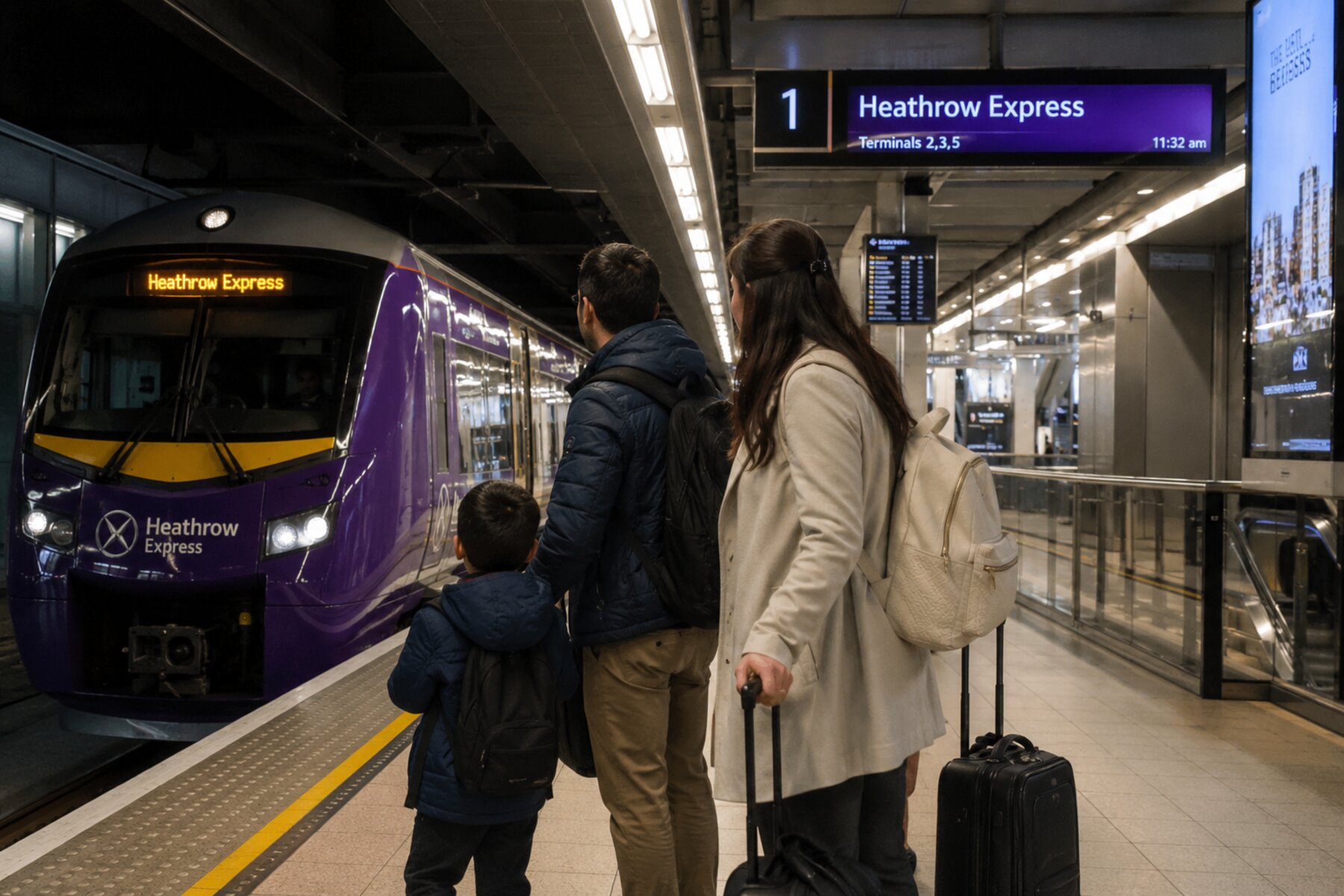
One more practical note for the European entries: if your routing connects through London, the ground transfer is a bigger variable than most people budget for. We compared every option in our guide to getting from Heathrow into central London, and the cheapest choice is not the obvious one.
The Bottom Line
September 2026 is the best-value month on the calendar, and the reasons are boring and verifiable: school terms, unsold capacity, thermal lag, and a fee window that has already closed. None of that is in dispute.
What's worth being skeptical about is the promise of emptiness. Shoulder season is now a mainstream strategy, and the destinations that appear on every list have already absorbed the demand that was supposed to make them quiet. The fifteen above were chosen because each has a dated, specific reason to be good in September — a harvest, a migration, a school term, the return of darkness — rather than because they photograph well.
Pick the one whose calendar event you actually care about. Book it four to eight weeks out. And if the destination is cheap because of the weather, make sure you're the one holding the insurance, not the one providing it.